
Deep Tissue Massage Dubai At Your Home, 24/7
A therapist trained specifically in deep tissue technique comes to your home, hotel, or apartment anywhere in Dubai, with a professional table, oils, and fresh linens. From AED 400 for sixty minutes, at any hour, at one price across the whole city.
Before you book, it is worth knowing what you should be getting, because a great deal of what is sold as deep tissue in this market is not.
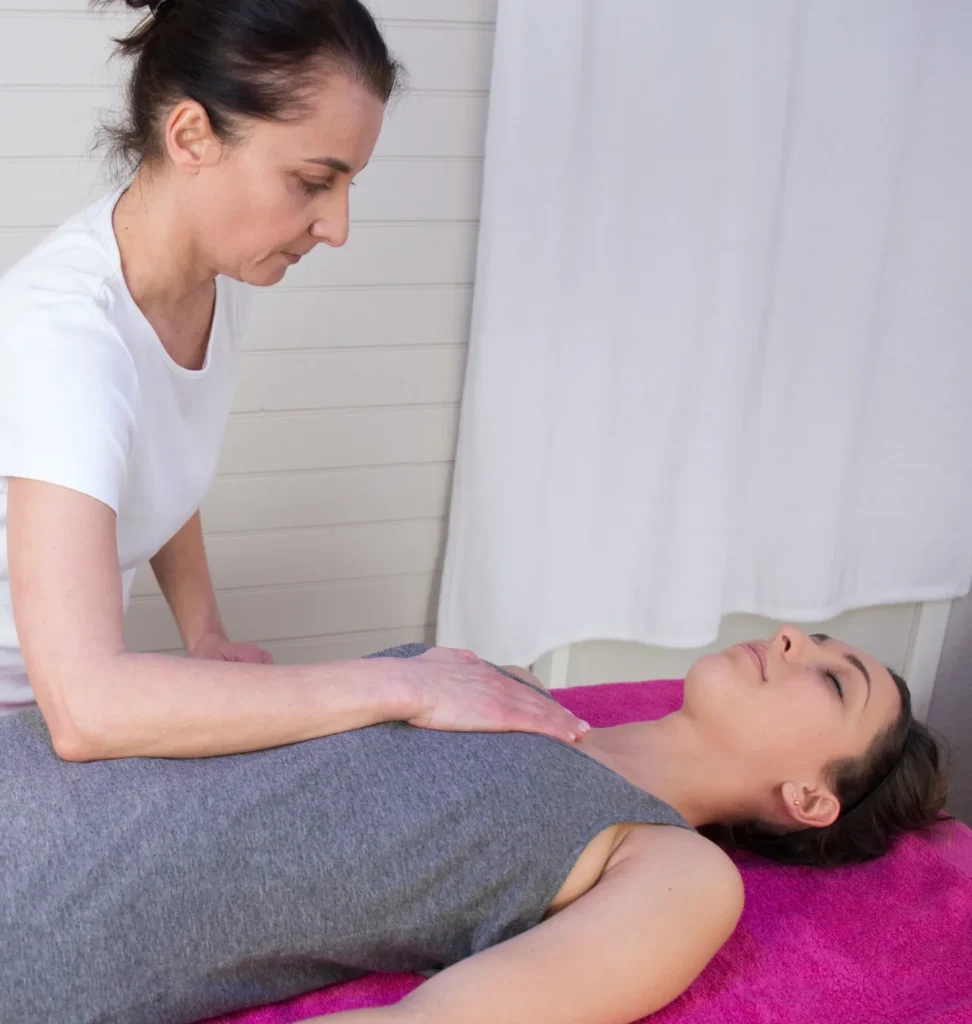

Most "Deep Tissue" in Dubai Is Not Deep Tissue
Here is what usually happens. You book a deep tissue massage, and what you receive is the same full-body sequence a Swedish massage would have given you, delivered with more force.
That is not deep tissue. It is a Swedish massage performed hard, and it is the single most common reason people conclude that deep tissue is not for them because a fast, forceful full-body session is unpleasant without being particularly useful.
Deep tissue is a technique, not a pressure setting. The defining feature is not how hard it is. It is how slowly and how specifically it is done.
A therapist doing genuine deep tissue work is not covering your whole body evenly. They are finding particular bands of tight tissue, staying on them, and working through the layers in sequence: surface muscle first, then deeper, waiting for each layer to release before going further. It is slow on purpose. Speed is what makes firm pressure hurt.
If you have had a “deep tissue” massage that felt like being briskly pushed around for an hour, you have not had deep tissue. That is worth knowing before you decide the treatment does not suit you.
What It Actually Involves
Four things a trained deep tissue therapist is doing that a firm Swedish massage is not.
Working in layers, in order. Surface tissue has to release before anything underneath it can be reached. Forcing through a tense outer layer just makes it tense harder. This is why the first ten minutes of a good deep tissue session can feel almost gentle.
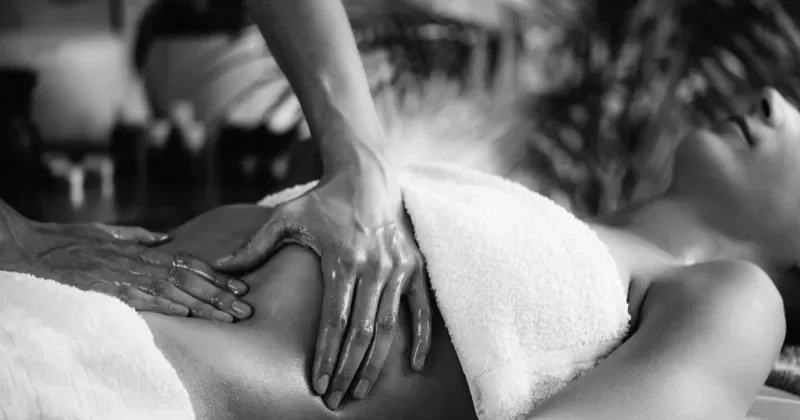
Sustained pressure rather than strokes. Instead of gliding, the therapist finds a tight spot and stays there, holding pressure until the tissue gives. Those pauses are the treatment, not a break in it.
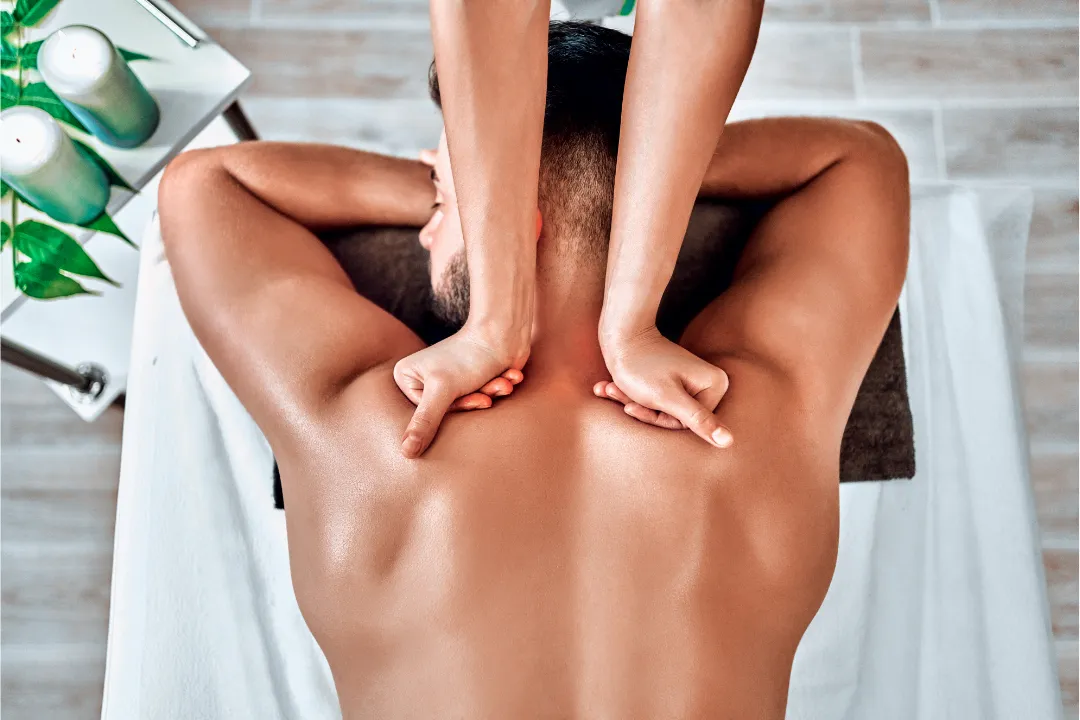
Cross-fibre work. Working across the direction of the muscle fibres rather than along them, which reaches tightness that lengthwise strokes pass straight over.
Following the tissue, not a routine. The therapist adjusts continuously based on what they find, which is why no two deep tissue sessions on the same person are quite identical, and why it cannot be delivered from a fixed sequence.
This is the reason we assign deep tissue specifically. It is the most technically demanding of the treatments we offer, and a therapist whose strength is relaxation work is a different practitioner from one whose strength is this. When you book, you are told which you are getting.
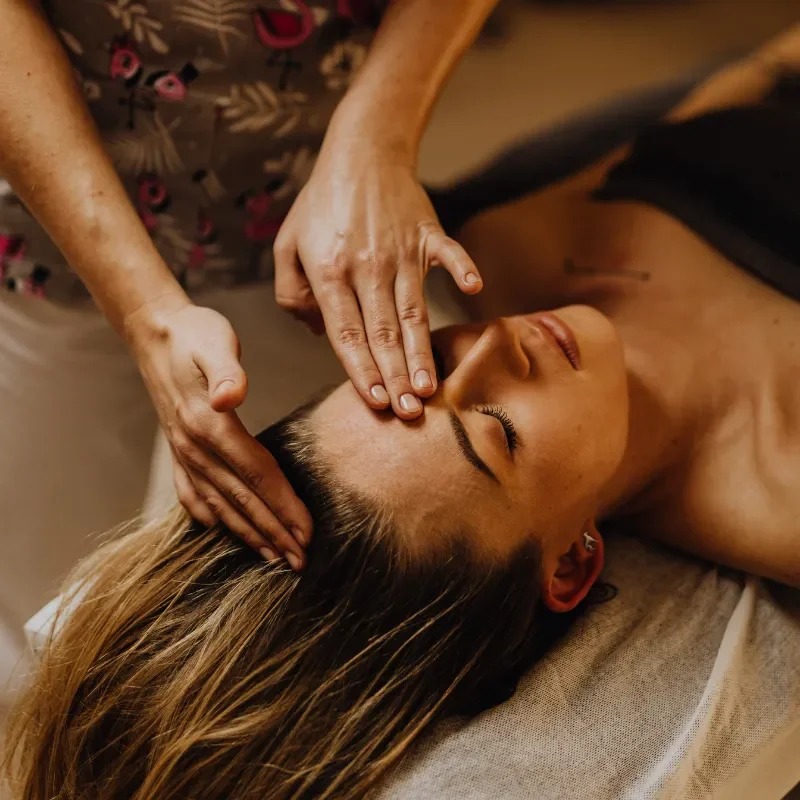
Does It Hurt? The Honest Answer
No, and if it does, something is wrong.
There is a real distinction between firm and painful, and it is worth learning because it puts you in control of the session.
Firm work on tight tissue produces a specific sensation people usually describe as “good sore”: intense, oddly satisfying, and you can feel it doing something. You want to stay with it rather than get away from it.
Pain is different. It is sharp; you brace against it, and your instinct is to pull away.
The breath test. This is the most useful thing on this page. If you cannot breathe normally, the pressure is too much. Full stop. Holding your breath, breathing shallowly, or gripping the table are all signs that your body has stopped cooperating and started defending itself, and once a muscle is defending itself, no amount of extra force will release it. It will do the opposite.
So: if you are holding your breath, say so. The therapist eases off, the muscle unclenches, and the work becomes possible again. Saying it is not rude and it is not a failure. It is the single most useful piece of information you can give.
Anyone who tells you that you need to tolerate more is wrong, and not somebody to book again.


Who It Suits
Tightness that has been there for months or years. This is the main case. A band across the shoulders that never quite goes, a lower back that has ached since a particular job, a neck that turns further one way than the other. Long-standing muscular tightness is what deep tissue is for.
Work that loads the same muscles the same way, daily. Desk work, driving, standing all day, lifting and carrying, tool use, training. Repetitive loading builds tightness in predictable places and deep tissue reaches it.
People who have found other massage too light to do anything. If Swedish massage feels pleasant but you get up unchanged, this is the one to try.
Recovery from training heavy legs that will not clear between sessions, tight hips, an overworked shoulder.
Who It Does Not Suit
Worth being straight about, because booking the wrong treatment is the most common reason a session disappoints.
If you want to switch off and relax, book Swedish instead. Deep tissue requires your attention and gives you a workout of sorts. It is not the treatment for an hour of escape.
If firm pressure is simply not enjoyable for you, book Balinese. It does genuinely therapeutic work at a medium-to-firm pressure and is considerably more comfortable to lie through. A great many people who think they need deep tissue actually want Balinese.
If this is your first ever professional massage, start with Swedish. You will learn what you like, what pressure suits you, and how to communicate during a session, and the deep tissue booking after that will be far better for it.
If you are exhausted rather than tight, not sleeping, running on empty, nothing specific hurting, deep tissue is the wrong direction. Swedish at ninety minutes will do more.
If you feel stiff and restricted rather than knotted, as though the movement has gone rather than the muscle being tight, Thai massage works on range of movement and often does more than pressure will.
And if something is sharply painful, came on suddenly, or has not shifted in several weeks, see a doctor before booking any massage. We are a spa service. Deep tissue helps with muscular tightness; it is not a substitute for finding out what is actually wrong, and a good therapist will tell you the same thing.
Afterwards
Mild tenderness for about a day is normal. It feels like the ache after unfamiliar exercise, and it passes.
Being genuinely sore for three days is not. If that has happened to you before, the pressure was more than your body wanted. Book Balinese next time, or simply say “medium, not deep,” a perfectly normal instruction that will be followed.
Most people feel the benefit the next day rather than immediately. Swedish massage feels best while it is happening; deep tissue tends to feel best the following morning. That is the normal pattern, and it is worth knowing so you do not judge the session on how you feel walking out of the room.
Drink some water. Not because anything is being flushed out of you; that is a marketing line rather than physiology, and we would rather not repeat it. Most people are mildly dehydrated anyway, and standing up briskly after lying still for an hour is the sort of thing that leaves people light-headed.
Move gently rather than not at all. A short walk later is better than sitting still for the rest of the evening.
How Often
For something long-standing: fortnightly for the first month or two, then monthly. One session will make entrenched tightness noticeably better for a few days and will tell you whether this approach helps you. What actually shifts it is repetition.
For maintenance: monthly is enough for most people.
Through a heavy period, a difficult stretch at work, a training block, a run of long shifts fortnightly, and booked during rather than after. That is when tightness accumulates fastest.
If you train: a day or two after a hard effort and a few days before the next one. Not the day before something important, because deep work can leave muscle feeling flat for about a day.
Anybody promising to fix six years of tightness in one appointment is selling you something. Ask for a monthly rate instead; it is cheaper than booking session by session, and it is the pattern that actually works.
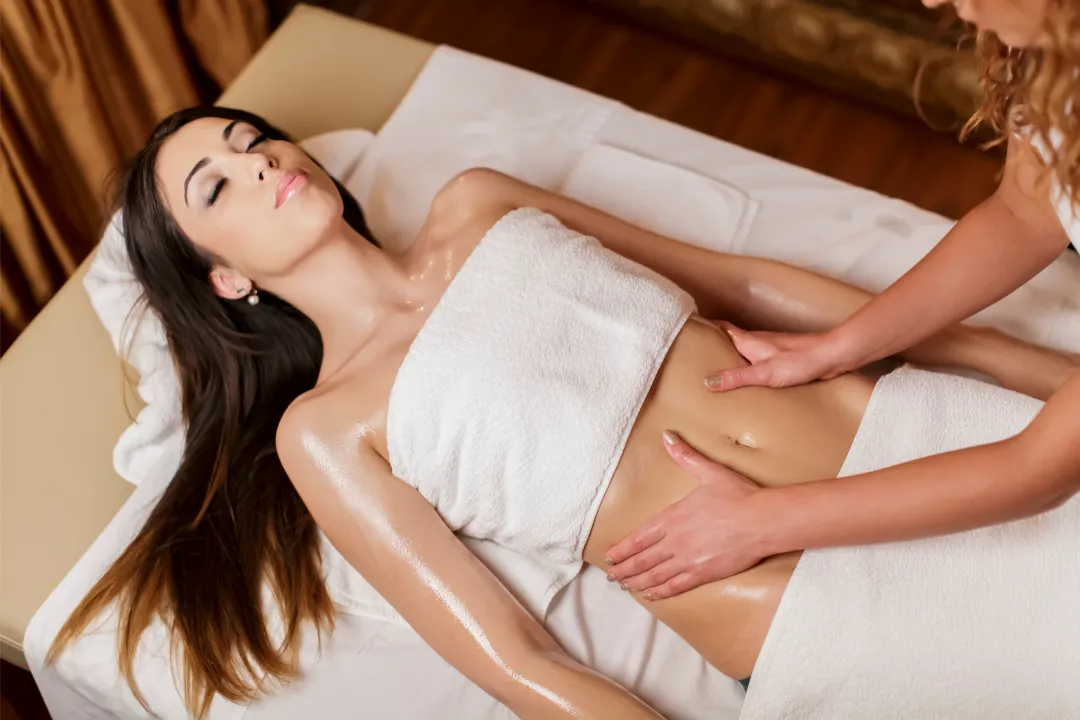
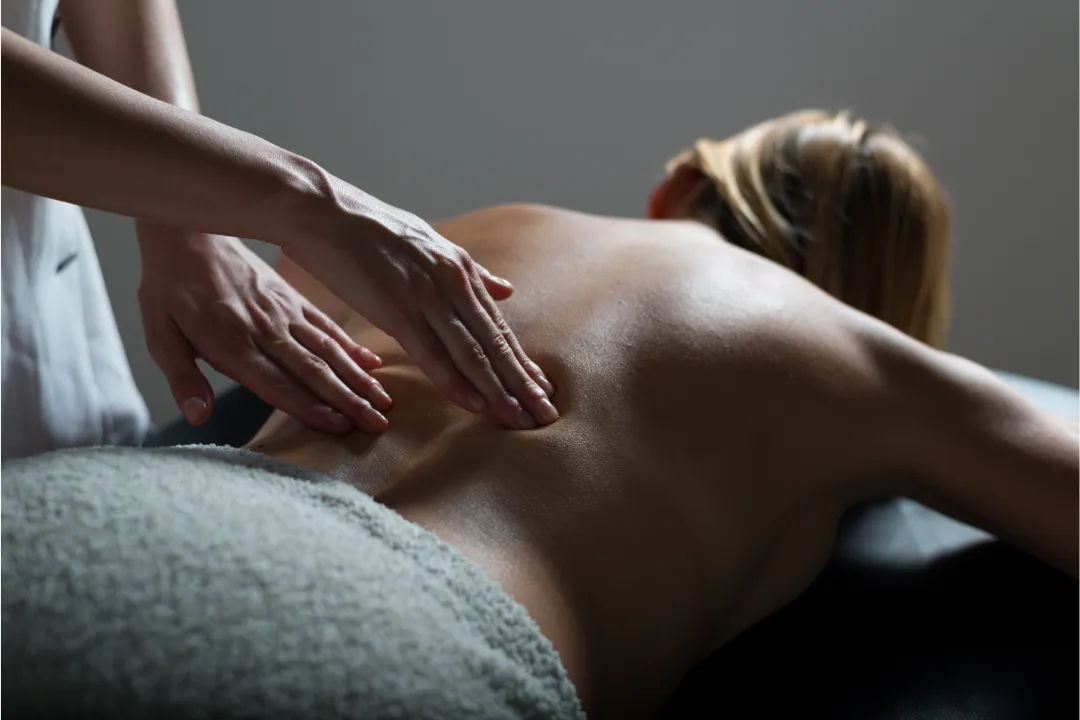
Ask for the Area, Not Just the Treatment
The most useful thing you can do when booking is name the region you want the time spent on.
Sixty minutes concentrated on the upper back, shoulders, and neck will do considerably more than sixty minutes spread evenly across a body where only one part is the problem. Most people default to full-body because that is what a spa menu offers. You are not ordering from a menu here.
So say it plainly: sixty minutes, shoulders and neck only. Or ninety minutes, mostly legs and lower back. Or left side is much worse than the right. All of that gets passed to the therapist before they arrive and changes how they plan the hour.
Tell us what you do for a living as well. “I’m at a desk eleven hours a day”, “I stand on a shop floor”, “I’m on a grinder all day”, “I ride three mornings a week” one sentence, and the session is planned around it.
The Price
Deep tissue is at the lower end of our rate card, which is slightly counterintuitive given that it is the most technically demanding thing we do.
Full body relaxation massage -------------------- 450 AED
(60 min 450 AED/ 90 min 600 AED/ 120 min 780 AED)
Swedish Massage ---------------------------------- 450 AED
(60 min 450 AED/ 90 min 600 AED/ 120 min 780 AED)
Deep Tissue Massage ----------------------------- 400 AED
(60 min 400 AED/ 90 min 550 AED/ 120 min 700 AED)
Hot Stone Massage -------------------------------- 450 AED
(60 min 450 AED/ 90 min 600 AED/ 120 min 780 AED)
Thai Massage --------------------------------------- 450 AED
(60 min 450 AED/ 90 min 600 AED/ 120 min 780 AED)
Couple's Massage ---------------------------------- 800 AED
(60 min 800 AED/ 90 min 1,199 AED/ 120 min 1,599 AED)
Hot oil relaxation massage ----------------------- 450 AED
(60 min 450 AED/ 90 min 600 AED/ 120 min 780 AED)
Balinese Massage --------------------------------- 400 AED
(60 min 400 AED/ 90 min 550 AED/ 120 min 700 AED)
What Arrives
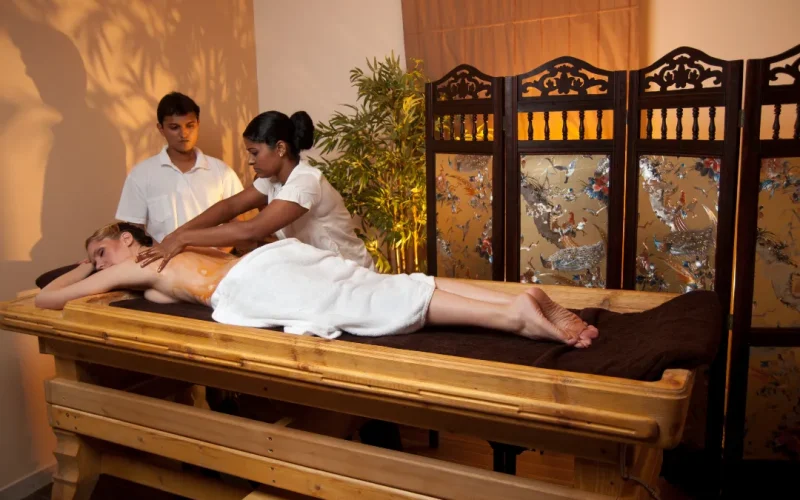
A professional hydraulic massage table, freshly laundered linens used only for your session, high-grade oils, and music if you want it. Setup takes a few minutes in whichever room you choose.
You need roughly two metres by two metres of clear floor. A studio manages it once a coffee table is moved; you do not need a spare room, and you do not need to tidy.
A short consultation happens before anything starts: what hurts, what you want, what to avoid, and anything you take. Mention any injury, recent surgery, pregnancy, high blood pressure, varicose veins, or medication that affects circulation, because all of those change how a therapist works. None of them stops you having a massage.
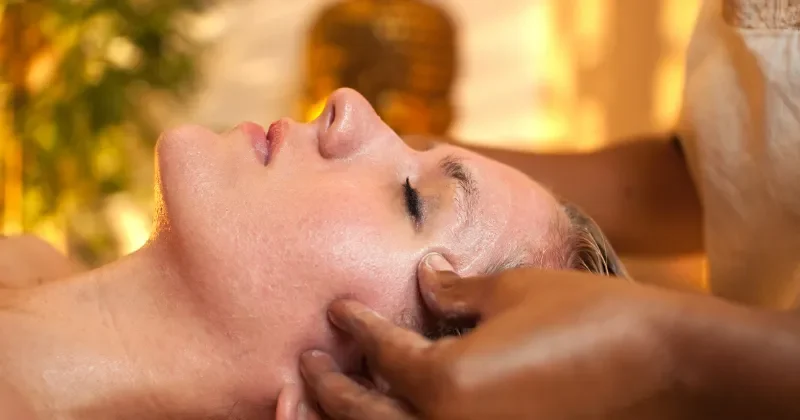
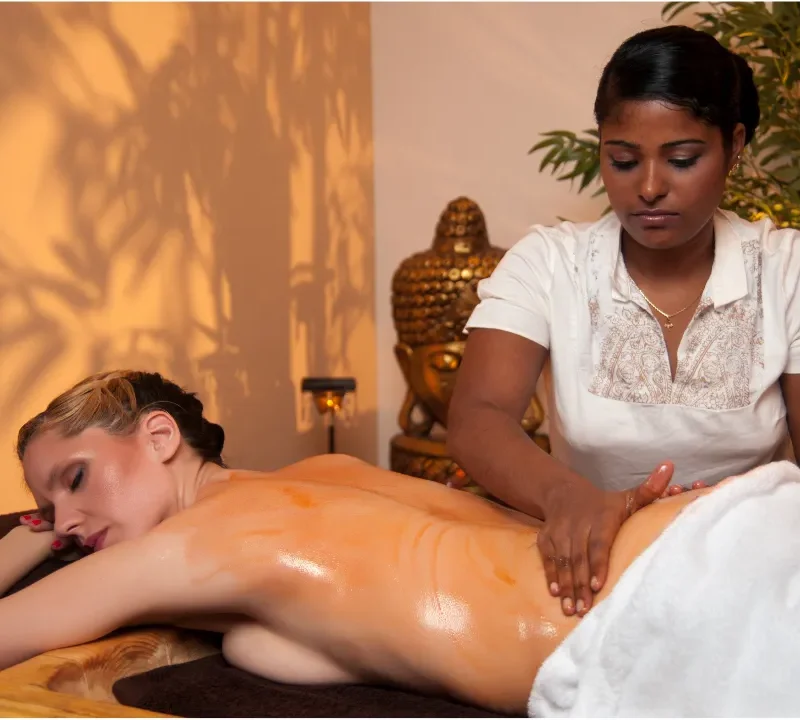
The Therapist Matters More Here Than Anywhere
For relaxation work, most competent therapists will give you a good hour. Deep tissue is not like that. It is a specific skill, and the gap between a therapist trained in it and one applying more force is enormous.
So we tell you who you are getting. Before you confirm a booking, you receive the therapist’s name, photograph, specialisation and DHA licence number, and every licence number is published on our therapist page so you can check it on the Dubai Health Authority’s public register yourself. Every home massage service in Dubai claims DHA-licensed therapists; as far as we can find, none of the others will show you the numbers.
You can also request a therapist by name, which for deep tissue is worth more than for anything else; someone who already knows which of your shoulders is worse and how much pressure you take starts the session well ahead of someone beginning from nothing.
Gender and language are both requested at booking and confirmed rather than hoped for. The therapist named in your confirmation is the therapist who arrives; if someone else is at your door, send them away, and you owe nothing.
How to Book It
Message us on WhatsApp with the duration, the area you want worked on, your address or hotel and room number, the time, and any preference on therapist gender or language. Tell us what you do for a living, and mention if you have had deep tissue before and how you found it.
A confirmation comes back in about thirty minutes: name, photograph, specialisation, licence number and arrival estimate. Nothing is committed until you approve it, and a therapist is usually with you within sixty to ninety minutes.
During the session, you can ask for less pressure, more time on one area, or for an area to be left alone entirely, at any point, and you can end it at any time without explaining yourself.
Where We Come
Everywhere in Dubai, at the same price, twenty-four hours a day. Deep tissue is the most requested treatment in the parts of the city where people sit the longest and work the hardest: Business Bay, DIFC, JLT, and Bur Dubai, among them.
Your area and everything else we cover are on our home spa service page, and you can book a home massage anywhere in Dubai on identical terms.
Real WhatsApp Reviews from Our Happy Dubai Clients


Book a Deep Tissue Massage in Dubai
The duration, the area you want worked on, and one line about what you do for a living. That last part is what makes the hour count.
Frequently Asked Questions
How much is a deep tissue massage in Dubai?
AED 400 for sixty minutes, AED 550 for ninety minutes, and AED 700 for two hours, at your own address. Every price includes the therapist, the professional table, the oils, fresh linens, the setup, and the travel, with no travel charge and no night surcharge. The rate is identical across every area of Dubai, and payment is taken at the end rather than when you book.
Does deep tissue massage hurt?
It should not. Firm work on tight tissue feels intense and productive, usually described as “good sore,” but sharp pain means the pressure is too much. The simplest test is your breathing: if you cannot breathe normally, ease the therapist off. Once a muscle starts defending itself against too much force, it will not release, so more pressure makes things worse rather than better. Ask for less at any point; it is expected, not rude.
What is the difference between deep tissue and Swedish massage?
Swedish uses long, flowing strokes at light to medium pressure and is aimed at relaxation and settling you down. Deep tissue is slower and far more specific the therapist finds particular bands of tight tissue and works through the layers in sequence using sustained pressure rather than strokes. Swedish generally feels best while it is happening; deep tissue tends to feel best the following day. Swedish is the better first massage; deep tissue is for tightness that has been there months or years.
Why do I ache after a deep tissue massage?
Mild tenderness for about a day is normal and feels similar to the ache after unfamiliar exercise. Being genuinely sore for three days is not normal and usually means the pressure was more than your body wanted, in which case book Balinese next time, or simply ask for medium rather than deep pressure.
How often should I have a deep tissue massage?
For long-standing tightness, fortnightly for the first month or two and then monthly. For general maintenance, monthly is enough for most people. Through a heavy stretch at work or a training block, fortnightly and booked during it rather than after, because that is when tightness accumulates fastest. No single session fixes something that took years to build.
Can I ask for the whole hour on my shoulders?
Yes, and for most people it is the better choice. Name the area when you book, and the therapist plans the session around it. An hour concentrated where the problem actually is does considerably more than an hour spread evenly across the whole body.
Is deep tissue right if I have never had a massage before?
Usually not as a first booking. Swedish massage teaches you what pressure you like and how to communicate during a session, and the deep tissue booking after that will be much better for it. If you would rather start firmer, Balinese sits between the two.
Should I drink water after a deep tissue massage?
Yes, but not for the reason usually given. Nothing is being flushed out of your body that is a marketing claim rather than physiology. Most people are mildly dehydrated anyway, and standing up briskly after lying still for an hour can leave you light-headed, which is reason enough.
Are your therapists trained specifically in deep tissue?
Yes, and we tell you which therapist you are getting before you confirm. Deep tissue is a distinct skill rather than a pressure setting, and a therapist whose strength is relaxation work is a different practitioner from one trained in this. You receive the therapist’s name, photograph, specialisation and DHA licence number in advance, and every licence number is published on our therapist page so you can verify it on the Dubai Health Authority register yourself.
Can I book deep tissue at night?
Yes, twenty-four hours a day, every day, including public holidays, at the same rate as a daytime session.
Is home massage legal in Dubai?
Yes, when the service is delivered by therapists licensed by the Dubai Health Authority. Massage in the UAE is a regulated activity and legitimate providers are required to work with DHA-licensed therapists rather than informal freelancers. We publish our therapists’ licence numbers so you can verify them yourself before booking.
What if the pressure is wrong during the session?
Say so immediately. Adjusting pressure is a normal part of the treatment, not a complaint, and a therapist who cannot adapt is not doing the job properly. If a session still falls short of a professional standard, tell us, and we will rebook you with a different therapist free of charge.