Arabic Massage Dubai — Authentic Regional Tradition. DHA-Licensed. Delivered to Your Home
At homeservicemassageindubai.com, we deliver authentic Arabic massage in Dubai to your home, hotel room, villa, or serviced apartment — performed by DHA-licensed therapists trained in the classical wellness traditions of the Arab world. Warm regional oils, culturally authentic technique, and the privacy of your own space. Professional massage table, traditional oil blends, and clean linens are included in every session. No travel required from your side. No shared spa environment.
Same-day WhatsApp confirmation. Available 24 hours, 7 days a week, across all of Dubai.
Book on WhatsApp — most sessions confirmed within 30 minutes.
What Is Arabic Massage? The Complete Cultural and Clinical Answer
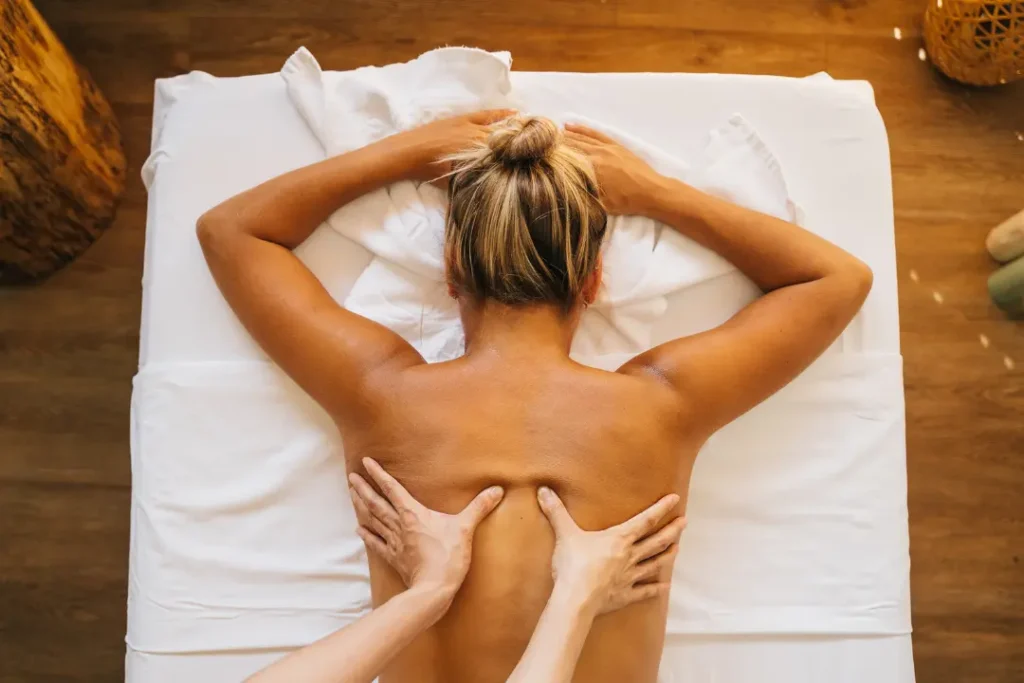
“Arabic massage” in Dubai’s wellness market refers to a distinct family of bodywork traditions rooted in the therapeutic cultures of the Arab world — a geographic and cultural region spanning North Africa, the Levant, the Arabian Peninsula, and Mesopotamia, each with its own regional refinements, oil traditions, and treatment protocols. Unlike European massage, which was systematised in the 18th and 19th centuries by named physiologists with documented academic frameworks, Arabic massage is an older, more culturally distributed tradition — transmitted through hammam attendants, traditional healers (hakeem), and family therapeutic practice across centuries of Islamic civilisation.
Understanding the distinct regional traditions within Arabic massage is the difference between a session that feels generic and one that is authentically calibrated:
The Khaleeji Tradition — Arabian Peninsula
The massage tradition of the Arabian Gulf (Khaleeji) is defined above all by its oils. Oud (agarwood resin — one of the most valuable aromatic substances in the world, extracted from Aquilaria trees infected with a specific mould) has been used in Gulf Arab wellness practice for over a thousand years as both an aromatic and a therapeutic agent. The neurological effect of genuine oud fragrance — warm, complex, balsamic, deeply grounding — is distinct from synthetic oud substitutes and produces measurable changes in autonomic nervous system state within minutes of inhalation.
The Khaleeji massage protocol uses long, slow, deeply pressured strokes — heavier than Moroccan technique, more rhythmic than Levantine — with warm oud-infused sesame or olive oil as the carrier. The session typically opens with the chest and abdomen, moves to the posterior chain, and ends with the extremities. The pace is deliberate: pressure is held for several seconds at each position before the next stroke, creating a sustained mechanical stimulus that deep Swedish effleurage does not produce.
Key oils: Oud-infused sesame oil, amber resin oil, frankincense (luban) oil. Distinctive feature: Sustained held pressure, deeply grounding aromatic environment, slow deliberate pace Best for: Deep stress release, insomnia, spiritual grounding, the culturally authentic Gulf experience
The Moroccan Tradition — Hammam and Beyond
The Moroccan Arabic massage tradition is the most globally recognised and the most technically complex — because it is inseparable from the hammam (Arabic and Berber: the communal steam bath), which forms the first stage of the complete Moroccan treatment protocol.
The full traditional Moroccan protocol consists of four stages:
Stage 1 — Hammam steam (At-Takhteet) The body is exposed to steam heat (40–50°C ambient temperature) for 10–20 minutes, which opens the pores, softens keratin bonds in the upper epidermis, dilates superficial blood vessels, and begins the thermal relaxation of superficial muscle tissue.
Stage 2 — Kessa exfoliation. A kessa (rough-weave Moroccan glove) is used in firm, repetitive strokes across the entire body surface, mechanically removing the softened dead epidermal cells that the steam has loosened. A single kessa session removes the equivalent of several weeks of accumulated dead skin, producing the characteristic “eraser” effect of rolled grey debris from the skin surface. The result is immediate: the skin surface is softer, more luminous, and dramatically more permeable to the oils applied in the subsequent stage.
Stage 3 — Rhassoul clay (Ghassoul) application. Rhassoul (from the Arabic ghassala — to wash) is a volcanic clay mineral mined in Morocco’s Atlas Mountains, with a uniquely high ion-exchange capacity that allows it to absorb surface sebum, toxins, and mineral deposits from the skin while depositing silica, magnesium, potassium, and calcium. Applied as a paste to the entire body surface and left for 5–10 minutes, rhassoul simultaneously cleanses, mineralises, and smooths the skin. It is not a cosmetic product — it is a mineralogical intervention with documented efficacy for acne, seborrheic conditions, and sensitive skin.
Stage 4 — Argan oil massage The final stage of the Moroccan protocol applies warm argan oil (Argania spinosa — endemic to Morocco’s Souss-Massa region, produced exclusively from hand-cracked argan kernels and among the richest plant sources of oleic acid, vitamin E tocopherols, and squalene) to the freshly exfoliated and mineralised skin in rhythmic effleurage strokes from the extremities toward the heart. The permeability created by the kessa and rhassoul stages allows argan oil to penetrate to the dermis layer, producing skin-nourishing effects that application to unprepared skin cannot achieve.
Our home Moroccan bath service in Dubai delivers all four stages — portable steam tent, kessa exfoliation, rhassoul clay, and argan oil massage — at your home or hotel room. The steam tent is carried and set up by the therapist. No hammam facility is required.
Duration: 90 min (full protocol) / 60 min (stages 3–4 only, without steam) Best for: Skin renewal, detoxification, the complete traditional Moroccan experience, pre-event skin preparation Price: AED 700 (90 min full) / AED 550 (60 min stages 3–4)
The Levantine Tradition — Lebanon, Syria, Jordan, Palestine
The Levantine Arabic massage tradition blends the hammam heritage common across the Arab world with specific pressure techniques derived from the hakeem (traditional healer) tradition of the Eastern Mediterranean. Levantine massage is characterised by:
- Firm bilateral hand pressure applied simultaneously to corresponding points on both sides of the body — a technique that produces a grounding bilateral neurological stimulus not achievable with unilateral strokes
- Emphasis on the head, neck, and upper trapezius — reflecting the Levantine hakeem’s historical role in treating headaches, jaw tension, and cervical pain from sustained manual labour
- Rose water (ma’ al-ward) used as a cooling toner applied after oil massage, is derived from Rosa damascena and has been used in Islamic medicine since at least the 9th century for its anti-inflammatory, astringent, and neurologically calming properties
- Black seed oil (Nigella sativa, Habbatus Sauda) — referenced in hadith literature as “a cure for everything except death” and documented in modern pharmacological research for its thymoquinone content, which has anti-inflammatory, antioxidant, and immunomodulatory activity — applied as a targeted therapeutic oil to areas of pain or inflammation
Duration: 60 min / 90 min Best for: Tension headaches, jaw tension, bilateral muscular symmetry, cervical pain, culturally authentic Levantine experience Price: AED 450 (60 min) / AED 600 (90 min)
The Egyptian Tradition — Kyphi Aromatherapy Massage
Egypt’s massage tradition is among the oldest documented in human history — depicted in tomb paintings at Saqqara dating to approximately 2330 BCE, making Egyptian therapeutic massage one of the earliest recorded forms of intentional bodywork. The Egyptian tradition is distinguished by its use of kyphi — a compound aromatic resin formulation combining frankincense (Boswellia sacra), myrrh (Commiphora myrrha), cinnamon (Cinnamomum verum), juniper, and other botanicals — historically prepared as an incense but in modern practice adapted into an oil-based massage medium.
The Egyptian massage technique uses medium-depth effleurage in a flowing, connected sequence that covers the entire posterior and anterior surface of the body without lifting the hands between strokes — creating a continuous sensory experience that promotes sustained parasympathetic engagement. It is the most flowing and uninterrupted of all Arabic massage traditions and produces the deepest subjective sense of relaxation per session.
Duration: 60 min / 90 min Best for: Deep relaxation, complete sensory experience, aromatic immersion, stress-related sleep disruption Price: AED 450 (60 min) / AED 600 (90 min)
The Therapeutic Oils of Arabic Massage — What Each One Does
The oils used in Arabic massage are not interchangeable with aromatic carrier oils. Each has a specific pharmacological profile, a specific traditional application, and a specific clinical indication. This is what competitors who list “natural oils” without specification cannot offer — and what every Arabic massage session at our service delivers:
Argan Oil (Argania spinosa) Cold-pressed from Moroccan argan kernels. Contains 80% unsaturated fatty acids (oleic and linoleic acid), tocopherols (vitamin E), and squalene. Penetrates to the dermis layer due to its low molecular weight. Clinical evidence supports efficacy for skin barrier function improvement, wound healing acceleration, and anti-inflammatory activity in the dermis. Argan oil is the correct post-hammam application oil — it requires freshly exfoliated, highly permeable skin to achieve its full therapeutic effect.
Black Seed Oil (Nigella sativa — Habbatus Sauda) Cold-pressed from Nigella sativa seeds. Active compound: thymoquinone. Peer-reviewed research documents anti-inflammatory, antioxidant, analgesic, and immunomodulatory activity. Used in classical Islamic medicine (Al-Tibb Al-Nabawi) as a broad-spectrum therapeutic oil. Applied in Arabic massage as a targeted treatment for areas of inflammation, joint pain, and chronic tension — not as a general full-body carrier oil.
Oud Oil (Agarwood — Aquilaria malaccensis) One of the most pharmacologically complex aromatic substances known. Contains over 150 identified volatile compounds, including agarospirol, jinkohol, and guaiol. Clinical aromatherapy research documents anxiolytic (anxiety-reducing), sedative, and autonomic nervous system-calming effects. The neurological response to genuine oud is qualitatively different from synthetic oud substitutes — the authentic compound produces a sustained parasympathetic shift rather than simple sensory stimulation. In Arabic massage, oud is used as an aromatic diffusion component and as an oil additive, not as a straight application oil due to its high concentration.
Rose Water (Ma’ Al-Ward — Rosa damascena) Steam-distilled from Damascene rose petals. Contains phenylethanol, citronellol, geraniol, and rose oxide. Clinical evidence supports topical anti-inflammatory, antimicrobial, and skin-soothing activity. In Levantine Arabic massage, rose water is applied as a toning step between oil application phases and as a post-session cooling treatment. Its fragrance component — phenylethanol — has documented anxiolytic activity in inhalation studies.
Frankincense Oil (Luban — Boswellia sacra) Steam-distilled from Arabian and Omani Boswellia resin. Active compounds: boswellic acids and alpha-pinene. Clinical research documents anti-inflammatory activity (5-LOX inhibition — a mechanism not achieved by standard NSAIDs), and inhalation studies show anxiolytic and antidepressant effects via limbic system stimulation. Frankincense is a component of the Khaleeji and Egyptian massage oil blends — not typically used as a standalone massage oil but as a diffusion and blend component.
Olive Oil (Zait — Olea europaea) Cold-pressed extra-virgin olive oil is the base carrier in Levantine and Egyptian massage traditions. Contains oleocanthal (an anti-inflammatory ibuprofen-like compound), oleic acid (skin barrier support), and polyphenols (antioxidant protection). One of the most clinically validated massage carrier oils: deeply nourishing, easily absorbed at warm temperatures, appropriate for all skin types.
Arabic Massage at Home in Dubai — Why It Matters More Than in a Spa
The cultural tradition of Arabic wellness was never designed for commercial spa settings. The hammam — the original Arabic therapeutic space — was a neighbourhood institution where clients were known by name, where the same attendant treated the same family for generations, and where the therapeutic experience was inseparable from hospitality (diyafa) and trust. A commercial spa that labels its treatment room “hammam” and charges per 60-minute slot has extracted the technique from the tradition and discarded everything that made the tradition therapeutic.
At home, in your own space, with a named DHA-licensed therapist confirmed before arrival, the Arabic massage experience recovers something closer to what the tradition was designed to produce: therapeutic depth achieved through complete safety, cultural familiarity, and unhurried attention. The Arabic concept of baraka (blessed abundance, therapeutic grace) is not reproducible in a commercial time-slot — it requires an environment of trust and ease, which your own home provides.
For the full clinical explanation of why private home massage produces measurably superior therapeutic outcomes compared to in-spa sessions, see our Private Massage Dubai service page.
All Arabic Massage Services — Pricing (Home Delivery, All Dubai Areas)
All prices are fully inclusive. DHA-licensed therapist, professional massage table, traditional regional oils (oud, argan, black seed, rose water, olive — as appropriate to the session), clean linens, portable steam equipment where applicable, travel across all Dubai areas, setup, and cleanup. No hidden fees. No late-night surcharge.
Service | Duration | Price |
Khaleeji Arabic Massage (oud & frankincense) | 60 min | AED 450 |
Khaleeji Arabic Massage | 90 min | AED 600 |
Levantine Arabic Massage (black seed & rose water) | 60 min | AED 450 |
Levantine Arabic Massage | 90 min | AED 600 |
Egyptian Aromatherapy Massage (kyphi blend) | 60 min | AED 450 |
Egyptian Aromatherapy Massage | 90 min | AED 600 |
Moroccan Bath + Argan Massage (full protocol) | 90 min | AED 700 |
Moroccan Bath Stages 3–4 (rhassoul + argan) | 60 min | AED 550 |
Arabic Four-Hand Massage (two therapists) | 60 min | AED 850 |
Arabic Four-Hand Massage | 90 min | AED 1,100 |
What Separates Our Arabic Massage Service From Every Competitor
Verified DHA license — requestable before booking. Every therapist holds a current Dubai Health Authority massage therapy license. You can request the license number before confirmation and verify it on the DHA practitioner portal. No competitor offering Arabic home massage in Dubai provides this as standard.
Regional tradition specified at booking — not “Arabic massage” as a generic. At booking, you specify which regional tradition you want: Khaleeji, Moroccan, Levantine, or Egyptian. The corresponding oil formulation and technique protocol is then confirmed. You are not receiving a generic “Arabic-style” session — you are receiving a specific, regionally calibrated treatment.
Authentic oils — verified formulation, not relabelled carrier oil. Our oud oil is genuine steam-distilled agarwood — not synthetic oud fragrance in a carrier base. Our argan oil is cold-pressed Moroccan argan — not argan-scented sunflower oil. Our black seed oil is cold-pressed Nigella sativa — not a capsule extraction. These distinctions matter clinically and are confirmed with every booking.
Named therapist confirmed at booking — no substitutions. You receive the therapist’s real name, professional photograph, and documented specialisation before confirmation. The confirmed therapist is the one who arrives.
Gender confirmation guaranteed. Female clients who book a female therapist receive a female therapist. Male clients who book a male therapist receive a male therapist. This is operationally enforced — not overridden under scheduling pressure.
30-minute WhatsApp confirmation, 24/7 Same-day bookings are standard. Late-night sessions are operationally staffed.
Satisfaction guarantee — rebook free if expectations are not met
Coverage — Arabic Massage Home Service Across All Dubai
Prime Zones: Downtown Dubai · Dubai Marina · Palm Jumeirah · Jumeirah 1, 2 & 3 · JBR · Business Bay · DIFC · Meydan · Dubai Hills Estate · Emirates Hills
Mid-City Areas: Al Barsha · Al Quoz · Al Wasl · Satwa · Karama · Bur Dubai · Deira · Oud Metha · Al Mankhool · Al Nahda · Muhaisnah
Suburban & New Communities: JVC · JVT · Damac Hills · Damac Hills 2 · Arabian Ranches · Motor City · Sports City · Dubai South · Dubai Creek Harbour · Emaar Beachfront · Silicon Oasis · International City · Al Nahda
Hotel Zones: All 5-star and 4-star hotels across Downtown, Marina, JBR, Palm Jumeirah, Business Bay, DIFC, and Deira. Arabic massage and Moroccan bath home service is particularly popular among guests at luxury properties who prefer privacy and cultural authenticity over the hotel spa’s commercial format.
Related Services
Our complete home massage service covers every major regional and technical tradition, all delivered by DHA-licensed therapists to your door across Dubai:
- Russian Massage Dubai — The most clinically structured European massage tradition. Five-technique Soviet physiotherapy protocol in strict anatomical sequence. Firm, systematic, deeply therapeutic — the Eastern European counterpart to Arabic massage’s depth of cultural tradition. Available at home by DHA-licensed therapists.
- Indian Massage Dubai — Authentic Ayurvedic home massage: Abhyanga, Shirodhara, Elakizhi, and Chavutti Thirumal. Kerala-trained, DHA-licensed therapists. Like Arabic massage, Indian Ayurvedic therapy uses pharmacologically active oils — argan oil in the Moroccan tradition and sesame oil in Abhyanga share the same clinical rationale: dermal penetration of therapeutic compounds through warm oil application on prepared skin.
- Private Massage Dubai — All Arabic massage modalities and Moroccan bath delivered in a fully private setting at your home, hotel, or villa. The named therapist confirmed. Zero shared environment. For clients who require complete privacy, including Emirati and Arab national clients who prefer not to attend commercial spa facilities.
- European Massage Dubai — The Western physiotherapy counterpart to Arabic massage. Swedish, deep tissue, Manual Lymphatic Drainage, and connective tissue massage by DHA-licensed therapists. For clients who maintain both European and Arabic massage bookings for different therapeutic purposes.
- Male to Male Massage Dubai — All Arabic massage modalities available with a confirmed DHA-licensed male therapist. Khaleeji, Levantine, and Egyptian protocols available. Gender confirmed at booking. Zero substitutions.
Home Massage Dubai — The complete range of mobile massage services across Dubai, 24/7, by DHA-licensed therapists. All modalities. All areas.
How to Book an Arabic Massage in Dubai — Home Service
Step 1:
Message us on WhatsApp: Arabic massage tradition (Khaleeji / Moroccan full hammam / Levantine / Egyptian), duration, location, gender preference for therapist, and preferred time. Mention any skin sensitivities or allergies for oil selection.
Step 2:
We confirm your DHA-licensed therapist's name, photo, and license number — and the specific oil formulation for your chosen tradition, within 30 minutes.
Step 3:
Your therapist arrives at your door with all equipment — table, regional oils, kessa, and rhassoul for Moroccan sessions, portable steam tent if booked. Set up in under 10 minutes.
Step 4:
Full session. Authentic regional tradition. All-inclusive. No surprises.
Arabic Massage Dubai — Frequently Asked Questions
What is Arabic massage, and how is it different from other massage types?
Arabic massage is a family of bodywork traditions rooted in the therapeutic cultures of the Arab world — the Arabian Gulf (Khaleeji), North Africa (Moroccan), the Levant (Lebanese, Syrian, Jordanian), and Egypt. Each tradition has its own regional oils, technique emphasis, and cultural context. What unifies them is the central role of aromatic oil application, a slower and more meditative pace compared to European massage, and an emphasis on holistic wellbeing — body, mind, and spirit — rather than isolated muscular intervention. The oils used (oud, argan, black seed, rose water, frankincense, olive) are pharmacologically active, not merely aromatic, and each has documented clinical properties.
What is the difference between an Arabic massage and a Moroccan bath?
Arabic massage and Moroccan bath (hammam) are related but distinct. Arabic massage refers to the oil-based bodywork technique. Moroccan bath is a four-stage ritual — steam, kessa exfoliation, rhassoul clay, and argan oil massage — in which the massage is the final stage of a comprehensive skin and body treatment. Our home service delivers both: you can book an Arabic massage only, or the full Moroccan bath protocol, including a portable steam tent at your home.
Is the hammam available as a home service in Dubai?
Yes. Our full Moroccan bath protocol — portable steam tent, kessa exfoliation, rhassoul clay application, and argan oil massage — is available at your home, hotel room, or villa. The therapist carries and sets up the steam tent and all materials. A standard bathroom space is sufficient. 90-minute full protocol sessions start at AED 700.
What oils are used in Arabic massage?
This depends on the regional tradition you select. Khaleeji sessions use oud-infused sesame or olive oil with frankincense. Moroccan sessions use argan oil with rhassoul clay in the preparatory stages. Levantine sessions use black seed oil and rose water. Egyptian sessions use kyphi-inspired blends with frankincense and myrrh. All oils are authentic, formulation-verified preparations — not generic carrier oils with added fragrance. Specify any skin sensitivities or allergies at booking.
Is Arabic massage appropriate for men?
Yes. Arabic massage has no gender restriction — the hammam tradition historically served both men and women (in separate sections). Our service has both male and female DHA-licensed therapists trained in Arabic massage traditions. Specify your gender preference at booking, and it is confirmed — not substituted.
How often should I book an Arabic massage in Dubai?
For general well-being maintenance: once every 2–4 weeks. For the full Moroccan bath protocol, once monthly is typical — the kessa exfoliation cycle aligns with the skin’s approximately 28-day epidermal renewal cycle. For stress management or insomnia: weekly initially, reducing frequency as the condition improves.
Can I book an Arabic massage at a hotel in Dubai?
Yes. We service all major hotels across Dubai. The full Moroccan bath protocol — including the portable steam tent — is available in hotel rooms of sufficient size. Your therapist coordinates with the hotel professionally and handles all setup and cleanup. Arabic massage without the steam component is available in any standard hotel room.
What is the price of an Arabic massage at home in Dubai?
Standard Arabic massage sessions (Khaleeji, Levantine, or Egyptian style) start at AED 450 for 60 minutes and AED 600 for 90 minutes. The full Moroccan bath protocol (90 min) starts at AED 700. All prices are fully inclusive — therapist, oils, equipment, linens, travel, setup, and cleanup.
How quickly can I book an Arabic massage in Dubai?
Most WhatsApp requests are confirmed within 30 minutes. Same-day bookings are standard. Late-night bookings (after 10 PM) are available without surcharge and are operationally staffed.